
What Your Cape Cod Waterfront Home Is Actually Worth in 2026 (And What Zillow Can't Tell You)
In my experience working with waterfront sellers across Chatham, Brewster, and Falmouth, I've seen Zillow Zestimates miss the true market value of a Cape Cod waterfront property by six figures — in both directions. The reason isn't a bad algorithm. It's that the assets and liabilities that actually move the needle here are invisible to any automated valuation model: a grandfathered Chapter 91 dock, a Nitrogen Sensitive Area designation, or a non-resident tax surcharge that quietly adds thousands to annual carrying costs. This guide lays out the 2026 framework I use with clients to arrive at a defensible, transaction-ready number.
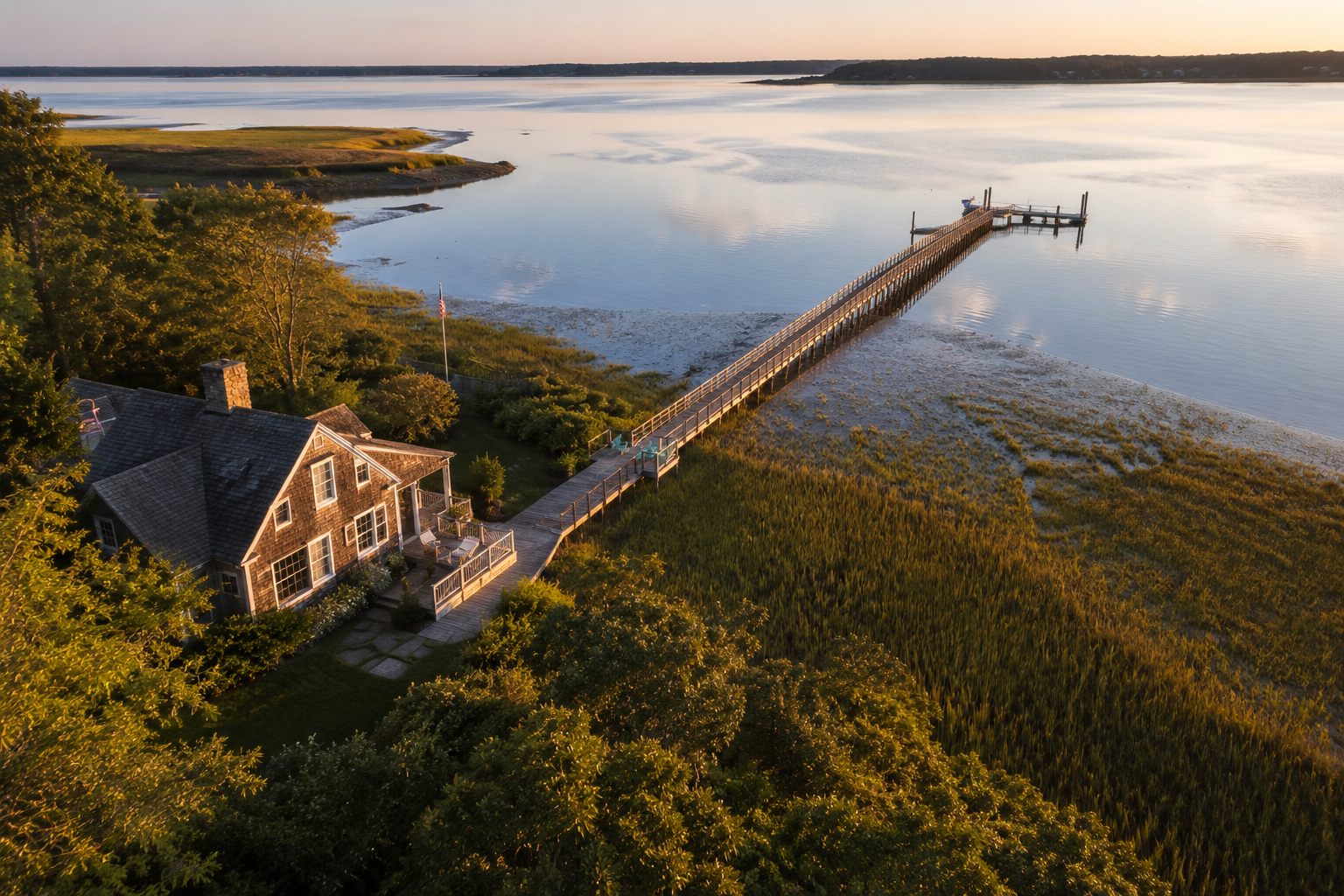
Why Standard Comparable Sales Fail on Cape Cod Waterfront
Automated valuation models treat waterfront homes as interchangeable, but two adjacent properties with the same square footage and lot size can differ in value by $250,000 or more based entirely on regulatory status. A property with an active, transferable Chapter 91 deep-water dock license and a compliant Title 5 septic system in a non-NSA watershed occupies an entirely different asset class than an otherwise identical home with a failing septic system in a Nitrogen Sensitive Area and no dock.
- AVMs ignore Chapter 91 licenses: Zillow and Redfin treat docks as generic outdoor amenities. They cannot recognize that a permitted, deep-water berth is virtually irreplaceable under 2026 environmental regulations and commands a $100,000 to $250,000+ premium over a comparable near-coastal property without one.
- AVMs skip NSA mapping: Automated systems do not query municipal GIS layers for Natural Resource Nitrogen Sensitive Area (NRNSA) designations. They compare homes in compliant watersheds to homes facing mandatory $40,000 I/A septic upgrades without any discount applied.
- AVMs miss intertidal rights: A property with fee-simple ownership to the mean low water mark — a private beach — and one subject to a historic public prescriptive easement are priced identically by algorithms, despite a meaningful legal and experiential difference.
The Chapter 91 Dock Premium: Your Most Valuable Intangible Asset
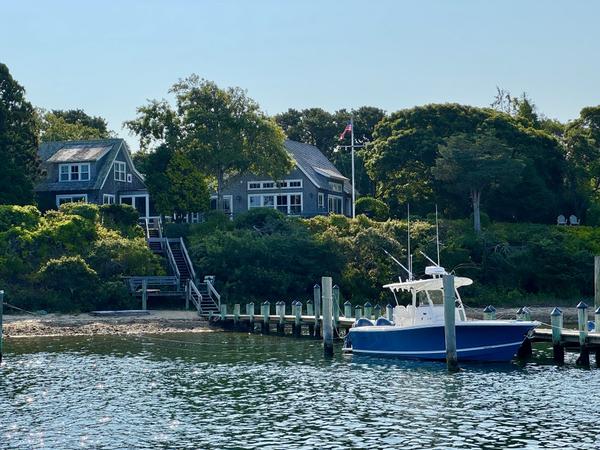
An active, fully-permitted deep-water dock with a current Chapter 91 waterways license is worth $100,000 to $250,000+ over an otherwise identical property — and that figure is rising, not falling, as new dock permitting becomes more restrictive. This is the single largest valuation asymmetry in the Cape Cod market that buyers and sellers routinely underestimate.
Cape Cod Conservation Commissions and the Massachusetts Department of Environmental Protection (MassDEP) heavily restrict new private dock construction to protect eelgrass beds, shellfish habitat, and public navigation channels. The practical result in 2026 is that buyers who want private deep-water vessel access cannot simply plan to permit a dock post-closing — the regulatory pathway is effectively closed for most new applications. Before listing, sellers should:
- Hire a marine surveyor to verify the physical dock matches the approved dimensions on the current Chapter 91 license. Even minor deviations in width or length require an amended license filing with MassDEP before transfer — a process that can take months and cost $5,000 to $15,000 in engineering and survey fees. sellers can review existing licenses via the Massachusetts Energy and Environmental Affairs data portal.
- Confirm the license has a remaining term of at least 15 years. Licenses nearing expiration or facing non-renewal due to newly mapped eelgrass beds represent a significant risk — I've seen buyers terminate contracts the week before closing when this issue surfaced late in due diligence.
- Disclose the dock's compliance status proactively in the MLS listing. Buyers who discover a non-compliant dock after executing a Purchase and Sale agreement have strong grounds to renegotiate or walk away.
Title 5 Septic and Nitrogen Sensitive Area (NSA) Compliance: The Hidden $40,000 Variable
Whether your property sits inside a designated Nitrogen Sensitive Area — and whether your municipality has secured a state watershed permit — determines if a $40,000 mandatory septic upgrade stands between you and a financed closing. This is the most common deal-killer I see in Barnstable County transactions, and it is almost always discovered too late.
Under the July 7, 2023 Title 5 regulatory update, homeowners in NSAs must upgrade to an Innovative/Alternative (I/A) denitrifying septic system within five years — unless their town has filed a Notice of Intent or received a 20-year Watershed Permit from MassDEP. If your municipality has not obtained a permit, the upgrade is your obligation as a seller. Institutional mortgage lenders in 2026 routinely require an active I/A installation contract and escrowed funds equal to 150% of the engineering bid before issuing a commitment letter on a non-compliant property. The practical impact: non-compliant septics in active NSAs effectively force a cash-only buyer pool or significant closing delays. Homeowners can check their property's status via the Barnstable County NRNSA viewer.
- Typical I/A system cost: $20,000 to $40,000+, driven by soil conditions, depth to water table, and Board of Health requirements for coastal soils.
- The value case for proactive installation: Spending $40,000 on a pre-listing I/A upgrade unlocks institutional mortgage financing, expands the buyer pool, and typically adds $50,000+ to the negotiated sale price — a net positive trade-off.
- Annual I/A monitoring cost: $1,000+ per year in O&M sampling fees. Homeowners with a clean compliance history can petition the local Board of Health for a monitoring reduction from quarterly to annual testing, yielding over $1,000 in recurring savings.
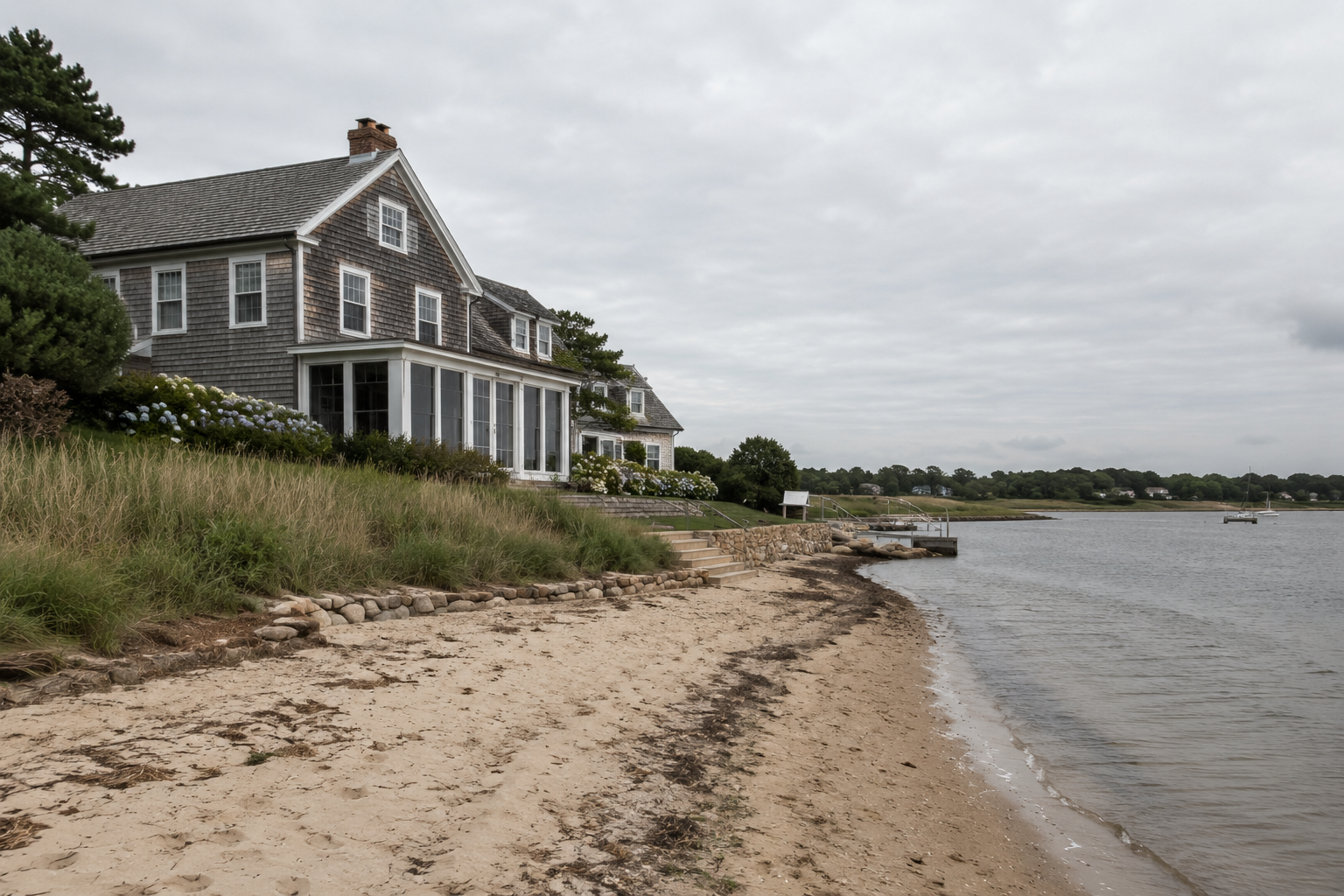
FEMA Flood Insurance vs. Private Market: A $4,000 to $8,000 Annual Spread
Relying on the National Flood Insurance Program (NFIP) for a Cape Cod waterfront home in a high-risk zone is often the most expensive insurance decision a homeowner can make. The private flood market routinely offers equivalent or superior coverage for 50% to 75% less than NFIP Risk Rating 2.0 premiums.
For a coastal home in a high-risk AE or V-zone in communities like Falmouth, NFIP annual premiums commonly range from $6,800 to $10,000+. Private carriers — writing through Lloyd's syndicates or domestic coastal programs — can deliver equivalent policies for $1,900 to $2,400 annually, with higher building coverage limits (up to $2 million vs. NFIP's $250,000 cap) and loss-of-use coverage the NFIP does not offer. Before listing, spend $1,500 on an updated FEMA Elevation Certificate. A revised elevation reading can move a property from a higher-risk flood zone designation to a lower one, cutting premiums further and making the property materially more attractive to financed buyers.
The Massachusetts Colonial Ordinance and Your Private Beach: What You Can (and Cannot) Enforce
Under the Massachusetts Colonial Ordinance of 1641-1647, private tidelands ownership extends to the mean low tide mark — but the public retains the absolute right to enter that same area for fishing, fowling, and navigation. Attempting to block lawful public tidal access has cost Cape Cod homeowners tens of thousands of dollars in litigation and routinely surfaces as a buyer concern during due diligence.
The practical impact on valuation: a property with demonstrable fee-simple ownership to the mean low water mark and no historic prescriptive easements commands a meaningful premium over a property where public beach traffic is historically established. Buyers should obtain a survey of the actual mean high and mean low tide boundaries before making an offer, and sellers should have this documentation ready as part of the disclosure package. Further guidance on public and private rights can be found on the Massachusetts government portal.
The Sagamore Bridge Factor: Which Properties Win and Which Lose Through 2037
The $2.1 billion Sagamore Bridge replacement project — with substantial completion now projected for spring 2037, not 2030 or 2032 as earlier real estate newsletters suggested — represents a decade-long valuation divergence between Upper Cape communities near the construction corridor and Lower and Outer Cape communities insulated from it.
- Properties within 0.25 miles of the western Sagamore realignment corridor: Expect localized valuation suppression of 5% to 10% during the active staging phase, driven by construction noise, staging equipment, and logistical disruption. Sellers should consult the official MassDOT project page for the latest construction timelines and noise mitigation plans.
- Properties in Dennis, Brewster, Orleans, and Chatham: Physically insulated from construction noise but directly benefiting from improved bridge capacity once spans open — strong long-term demand drivers for buyers already priced into these communities.
- Summer commute reality check: A standard 15-mile commute on Route 6 from Dennis toward the Sagamore Bridge currently swells from 20 minutes to 1.5 to 2 hours during peak Friday summer travel windows (3:00 PM to 7:00 PM). Bridge reconstruction will introduce additional staging-related delays in the near corridor through the construction phase.
The Residential Tax Exemption (RTE) Shift: What Non-Resident Buyers Must Calculate Now
The Chatham Select Board approved a 35% Residential Tax Exemption in August 2025, effective fiscal year 2027 — making it one of the most significant non-resident carrying cost changes in the Lower Cape market in years. Non-resident buyers of a $2 million Chatham waterfront home will pay materially higher annual property taxes than an identical neighboring property owned by a year-round resident.
Chatham's base rate of $3.67 per $1,000 of assessed value is already among the lowest on the Cape, supported by high aggregate property valuations. But the RTE redirects the municipal tax burden directly onto seasonal and investor-owned properties. Buyers evaluating Chatham against Dennis ($4.29 per $1,000) or Sandwich ($10.19 per $1,000) must now run a full non-resident tax projection — not just compare headline rates — before making a residency decision. Consult our guide on Cape Cod Property Taxes for a full breakdown of town rates.
Complete 2026 Barnstable County Closing Cost Reference
- Barnstable County Deed Stamps: $6.48 per $1,000 of sale price — higher than the standard Massachusetts rate of $4.56 per $1,000. On a $1,000,000 sale, this adds $6,480 in transfer costs. Sellers can calculate exact totals via the Barnstable Registry of Deeds calculator.
- Massachusetts State Excise Tax: $4.56 per $1,000 of sale price, collected at closing.
- Realtor Commissions: 5.57% average, negotiated and split between listing and buying brokers.
- Closing Attorney Fees: $271/hour or $750 to $1,250 flat for standard residential closings. Massachusetts requires a licensed real estate attorney at closing.
- Title 5 Septic Inspection: $800 to $2,000 depending on property size and soil testing requirements.
- Total Seller Closing Cost Range: 6% to 10% of sale price, inclusive of commissions and transfer costs.
The 2026 Waterfront Valuation Adjustment Matrix
The table below maps specific property configurations to realistic valuation adjustments relative to a baseline inland comparable, allowing sellers to arrive at a defensible list price independent of AVM estimates.
| Property Configuration | Septic / NSA Status | Dock / Beach Status | FEMA Zone | Valuation Adjustment |
|---|---|---|---|---|
| Fee-simple private beach + compliant deep-water dock | I/A installed, non-NSA | Active Chapter 91, 15+ years remaining | AE or X | +$200,000 to +$350,000 |
| Deeded wet-sand rights only, no dock | Standard system, non-NSA | Mooring or public marina access | AE | +$50,000 to +$100,000 |
| Waterfront, historic public easement, no dock | Failing Title 5, active NSA | None | V-Zone | −$40,000 to −$80,000 (pre-remediation) |
| Outer Cape bluff home, elevated views | Compliant | No dock (bluff access only) | Unrated / uninsurable risk | Highly variable; discount accelerates as setback narrows |
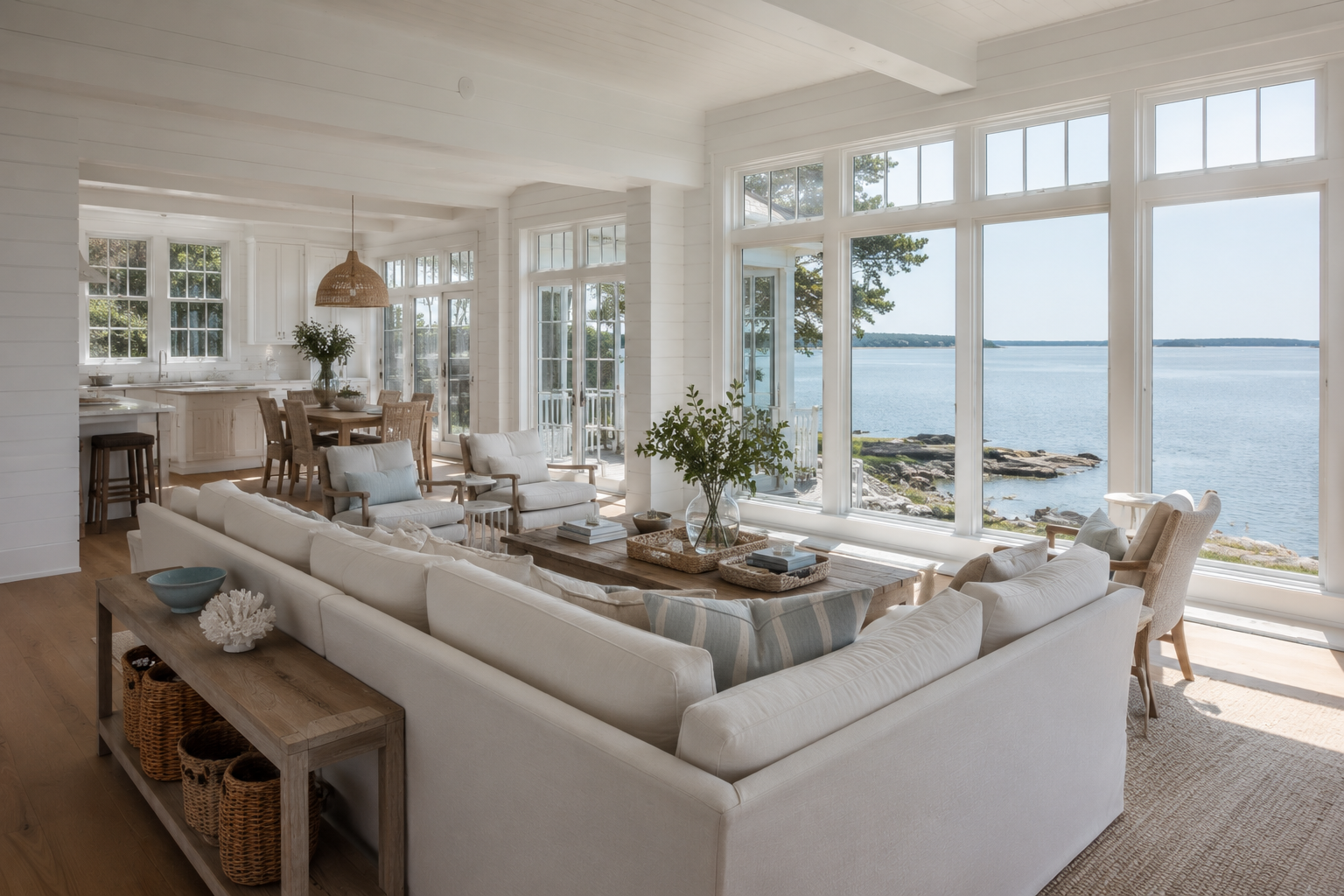
Relocation Trends and Nauset Regional School District Demand
For relocating families, a consistent valuation premium exists for turn-key housing stock within the Nauset Regional School District, serving Brewster, Orleans, Eastham, and Wellfleet. The sustained demand for properties in this district often results in faster sales and fewer negotiations compared to comparable homes outside the district boundary, even when balancing headwinds like declining regional student enrollments. Buyers seeking advice on specific Cape Cod Luxury Neighborhoods near these schools should contact our office for a confidential consultation.
Frequently Asked Questions
- Does a Chapter 91 dock license automatically transfer to a new buyer?
- Waterways licenses generally transfer with the property deed, but buyers must independently verify that the physical dock is in complete structural compliance with the original approved plans. Any deviation in dimensions, materials, or footprint requires an amended license filing before the transfer is legally clean.
- What is the actual cost of an I/A denitrifying septic system on Cape Cod in 2026?
- MassDEP technical guidance and Barnstable County Health Department cost records confirm a real-world baseline of $25,000 to $35,000 for I/A installation in standard coastal soil conditions, rising to $40,000+ in complex or high-water-table sites. National real estate calculators quoting $12,000 to $17,000 reflect non-NSA, non-coastal system costs that do not apply to the Cape Cod regulatory environment.
- When will the Sagamore Bridge replacement be completed?
- MassDOT's official project schedule — confirmed at the January 2026 public open house and updated with the May 2026 foundation load testing launch — projects substantial completion of both bridge spans in spring 2037. The formal design-build Notice to Proceed is scheduled for late fall 2027.
- How does the Chatham Residential Tax Exemption affect non-resident property owners?
- Beginning in FY2027, Chatham's 35% RTE shifts the municipal tax burden from year-round primary residents to seasonal and non-resident owners. A non-resident owner of a $2 million Chatham waterfront home will pay a materially higher effective tax rate than a year-round neighbor, even before any proposed state-level luxury transfer fees are applied.
- Can I get private flood insurance instead of NFIP for my Cape Cod home?
- Yes. Private flood policies meet federal mortgage underwriting requirements and routinely cost $1,900 to $2,400 annually for Falmouth-area coastal homes, compared to NFIP Risk Rating 2.0 premiums that frequently exceed $6,800 in high-risk AE and V-zones. Private carriers also offer building coverage limits up to $2 million and include loss-of-use coverage the NFIP does not provide.
Categories
Recent Posts


GET MORE INFORMATION