
Cape Cod Luxury Real Estate in 2026: A Village-by-Village Decision Guide for Serious Buyers and Sellers
In my experience advising buyers and sellers across Chatham, Osterville, and the Outer Cape, the single most expensive mistake I see is treating a headline price as the true cost of ownership. A $2.2 million Chatham estate can carry an invisible compliance bill — septic upgrades, sewer grinder pumps, wind deductibles, and flood policy gaps — that reshapes the economics of the deal entirely. This guide exists to give you the full picture before you make a decision of that magnitude.
What Are Homes Actually Selling For on Cape Cod in Q1 2026?
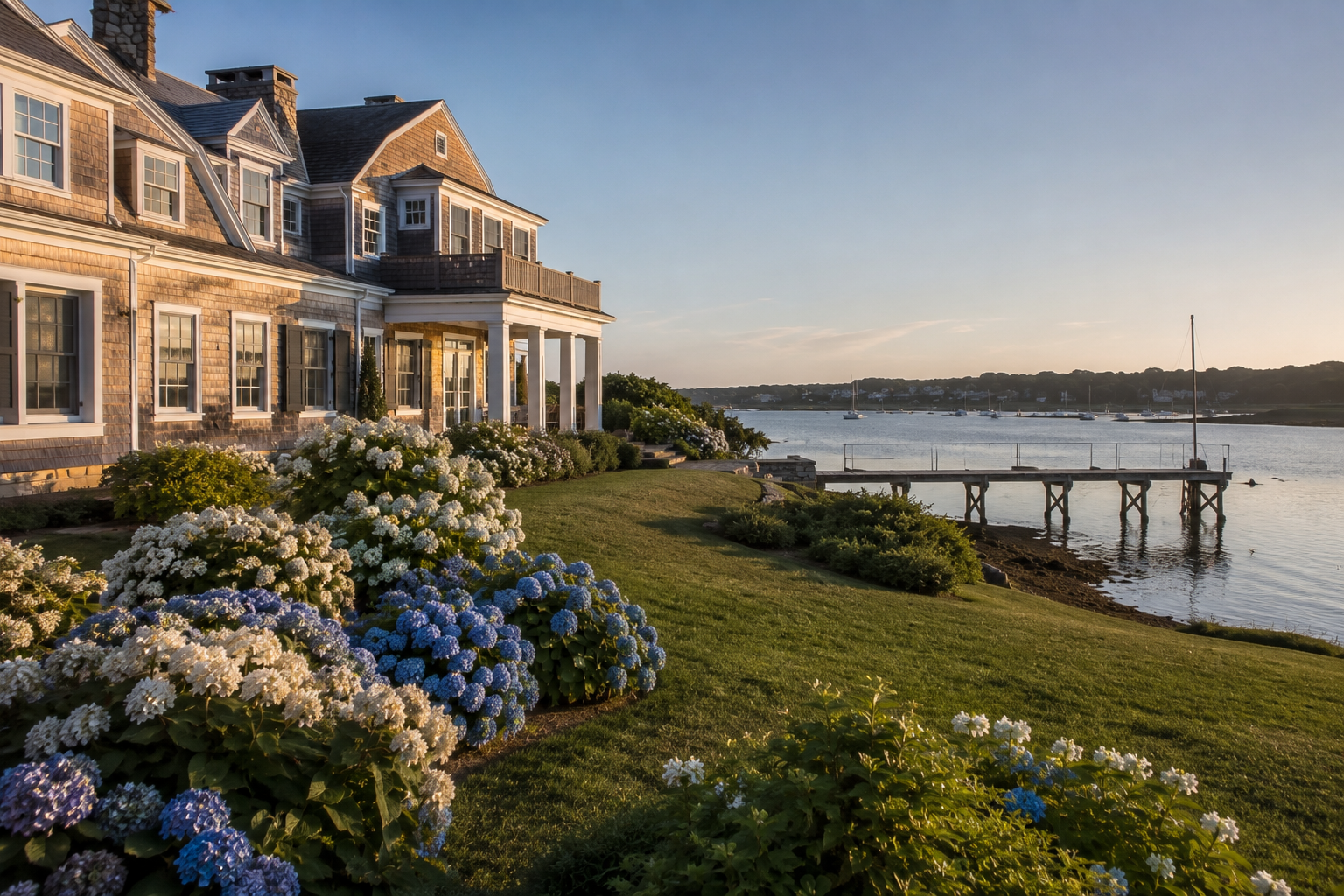
The Cape Cod single-family median sale price reached $760,000 in Q1 2026, a modest 1.3% increase year-over-year, but that number masks a profound split between the under-$1 million market and the luxury tier. Homes priced below $1 million averaged just 34.4 median days on market; properties at or above $1 million averaged 77 days — more than twice as long.
| Market Segment | Q1 2026 | Q1 2025 | Year-Over-Year Change |
|---|---|---|---|
| Single-Family Median Price | $760,000 | $749,900 | +1.3% |
| Single-Family Closed Sales | 433 units | 489 units | -11.5% |
| Single-Family New Listings | 583 units | 845 units | -21.7% |
| Under $1M Days on Market | 34.4 Days | N/A | — |
| $1M+ Days on Market | 77.0 Days | N/A | — |
New listing supply collapsed 21.7% compared to Q1 2025 — a structural constraint that is keeping prices firm even as unit sales fall. For serious buyers, this is not a buyer's market. It is a constrained market with selective leverage at the luxury tier.
Village-by-Village Breakdown: Where Is Luxury Capital Concentrating?
Chatham recorded a Q1 2026 median close price of $2,260,000 — a 19% year-over-year increase — driven by its status as the Cape's lowest property tax jurisdiction at $3.47 per $1,000 of assessed value. Osterville posted a $1,010,000 median, but that figure is deeply misleading: Oyster Harbors and Wianno waterfront estates routinely trade between $10 million and $25 million, almost entirely through off-market quiet listings that never appear on Zillow or Redfin.
| Village / Town | Median Close Price | Avg. Days on Market | Closed Sales | Active Inventory |
|---|---|---|---|---|
| Chatham | $2,260,000 | 100 Days | 10 units | 16 units |
| Hyannisport | $1,430,000 | 5 Days | 1 unit | 3 units |
| Osterville | $1,010,000 | 76 Days | 12 units | 20 units |
| Provincetown | $2,800,000 (avg) | — | 4 units | 18 units |
| Truro | $1,000,000 (avg) | — | 7 units | 15 units |
| Wellfleet | $1,100,000 (avg) | — | 5 units | 14 units |
Provincetown's average single-family sale price climbed 38% to $2,800,000 in Q1 2026, while Truro's fell 33% to $1,000,000 — not because the market weakened, but because a higher share of smaller inland properties closed in a low-volume quarter. In thin markets like Truro with only 7 sales, a single outlier transaction reshapes the average entirely. This is precisely the kind of distortion that portal data cannot explain and a local advisor must.
The Chatham Property Tax Advantage: Why It Matters More Than You Think
Chatham's fiscal year 2026 property tax rate of $3.47 per $1,000 of assessed value is the lowest on the entire Cape Cod peninsula. By comparison, Sandwich — the Upper Cape's most family-serviced municipality — carries the highest rate at $10.19 per $1,000, nearly three times higher.
On a $5,000,000 assessed estate, that difference produces an annual tax delta of approximately $33,600. Over a ten-year hold, that is $336,000 in compounding carrying-cost savings — a figure that justifies Chatham's premium acquisition price when modeled correctly. Several towns, including the Town of Barnstable, offer a 20% residential exemption for qualifying primary-residence owners, which can provide meaningful additional relief at the mid-tier price point.
The Hidden Cost Stack: Septic, Sewer, and the Compliance Bill No One Talks About
The compliance cost structure of a Cape Cod luxury purchase is the most consistently misunderstood element of the transaction — and the most consequential. There are four distinct scenarios a buyer may inherit, each with a different capital requirement and timeline.
Standard Title 5 Septic Replacement
A conventional three-bedroom Title 5 system costs $12,000 to $17,000 and is required to pass inspection at the point of sale. On its own, this is manageable. The deal-failure scenario occurs when a high-value Chatham or Harwich estate fails its pre-sale Title 5 inspection and the property sits within a state-designated Nitrogen Sensitive Area (NSA). In that case, the replacement is not a standard system — it is a mandated upgrade to an Innovative/Alternative (I/A) system within five to seven years.
Nitrogen-Reducing I/A Septic Systems
An I/A system using Best Available Technology (BAT) costs between $32,000 and $45,000 to install, plus an annual service contract exceeding $2,400. This is not optional in NSA-designated parcels; it is a state environmental mandate tied to protecting Chatham Harbor, Wychmere Harbor, and the estuaries that define the value of waterfront real estate on the Lower Cape. In my experience, buyers who are not briefed on this requirement before making an offer routinely attempt to renegotiate at the inspection stage — creating the exact adversarial dynamic that kills deals on estates at this price point.
Municipal Sewer Connection: Gravity vs. Grinder Pump
Municipal sewer connection costs depend entirely on topography. Properties that sit above the street's gravity sewer main connect via a standard lateral line at a cost of $12,000 to $16,000 plus Barnstable's one-time assessment fee, capped at $10,000 and financeable over 30 years. Properties that sit below the main — a condition common on waterfront lots and low-elevation parcels near Lewis Bay and Cotuit Bay — require a pressurized grinder pump system that adds significant cost and complexity.
| Connection Type | Capital Cost Range | Annual Ongoing Cost | Trigger Condition |
|---|---|---|---|
| Gravity Line (Standard) | $12,000 – $16,000 | Municipal sewer rate | Property above street main |
| Pressurized Grinder Pump | $16,100 – $25,970 | + ~$100/yr electricity | Property below street main |
| I/A Nitrogen-Reducing Septic | $32,000 – $45,000 | $2,400+ service contract | NSA-designated parcel, no sewer access |
A detail that almost never appears in listing disclosures: grinder pump installations frequently require an electrical service upgrade to 200-amp capacity. If the home is running on an older 100-amp panel — common in pre-1980 Cape Cod cottages and estates — that panel upgrade adds $3,000 to $8,000 and requires a licensed electrician's permit and a separate inspection cycle. This is the kind of sequential friction that turns a 60-day closing into a 120-day closing.
Flood Insurance: Why NFIP Coverage Is Structurally Inadequate for Cape Cod Luxury Estates
The National Flood Insurance Program (NFIP) caps structural coverage at $250,000 — a limit that is functionally irrelevant for a $4 million Osterville waterfront estate or a $6 million Chatham compound. Standard homeowners policies do not cover flood damage under any circumstance, which means luxury buyers face a mandatory gap between the NFIP cap and their actual replacement cost exposure.
| FEMA Flood Zone | Risk Level | NFIP Annual Cost | Private Market Annual Cost | Structural Coverage Cap |
|---|---|---|---|---|
| Zone X | Low | ~$610 | ~$325 | $250,000 (NFIP only) |
| Zone AE | Moderate–High | ~$4,200 | ~$1,050 | $250,000 (NFIP only) |
| Coastal V-Zone | Extreme Storm Surge | ~$6,800 | $1,900 – $2,400 | $250,000 (NFIP only) |
Private flood underwriters consistently offer rates 50% to 70% below NFIP Risk Rating 2.0 pricing while also removing the structural coverage ceiling — making private market placement the only rational choice for any Cape Cod estate valued above $500,000. Wind deductibles add a further layer of exposure: carriers in this region apply percentage-based deductibles of 1% to 5% of the insured dwelling value, rather than a fixed dollar amount. On a property insured at $1,000,000 with a 2% wind deductible, the homeowner absorbs the first $20,000 of any storm damage before the policy responds. At a $3,000,000 insured value, that figure becomes $60,000 to $150,000.
The Turnkey Premium: What Move-In-Ready Really Costs Buyers in 2026
Move-in-ready luxury properties on Cape Cod command a 20% to 30% premium over comparable properties requiring renovation. That premium is not irrational — it reflects the true cost of the alternative, which includes extreme regional contractor backlogs, multi-agency coastal permitting timelines, and the carrying costs of a non-habitable estate during the improvement cycle.
In my experience working with move-up buyers relocating from Boston's North Shore and Connecticut's Fairfield County, the buyers who resist the turnkey premium almost always underestimate contractor lead times on the Cape. A kitchen renovation that takes 90 days in Wellesley routinely takes 12 to 18 months in Chatham or Wellfleet, where licensed tradespeople are scarce year-round and Conservation Commission permits for any work touching the coastal envelope can trigger review cycles measured in seasons, not weeks. The 25% turnkey premium, modeled honestly against these realities, is frequently the cheaper path.
Oyster Harbors vs. Wianno: Understanding the Osterville Enclave Decision
Osterville contains two distinct luxury sub-markets that require separate evaluation frameworks. Oyster Harbors is a privately gated island community accessible via a single causeway, offering deep-water dock access to Nantucket Sound and a level of physical privacy unavailable anywhere else in Barnstable County. Wianno is a historic village core — unfenced, architecturally governed, and oriented around the Wianno Club's golf and sailing traditions. The choice between them is not a price question; it is a values question about privacy versus community identity. Waterfront estates in both enclaves regularly trade between $10,000,000 and $25,000,000, almost exclusively off-market.
Chapter 91 Waterfront Dock Compliance: The Deal-Stopper No Buyer Expects
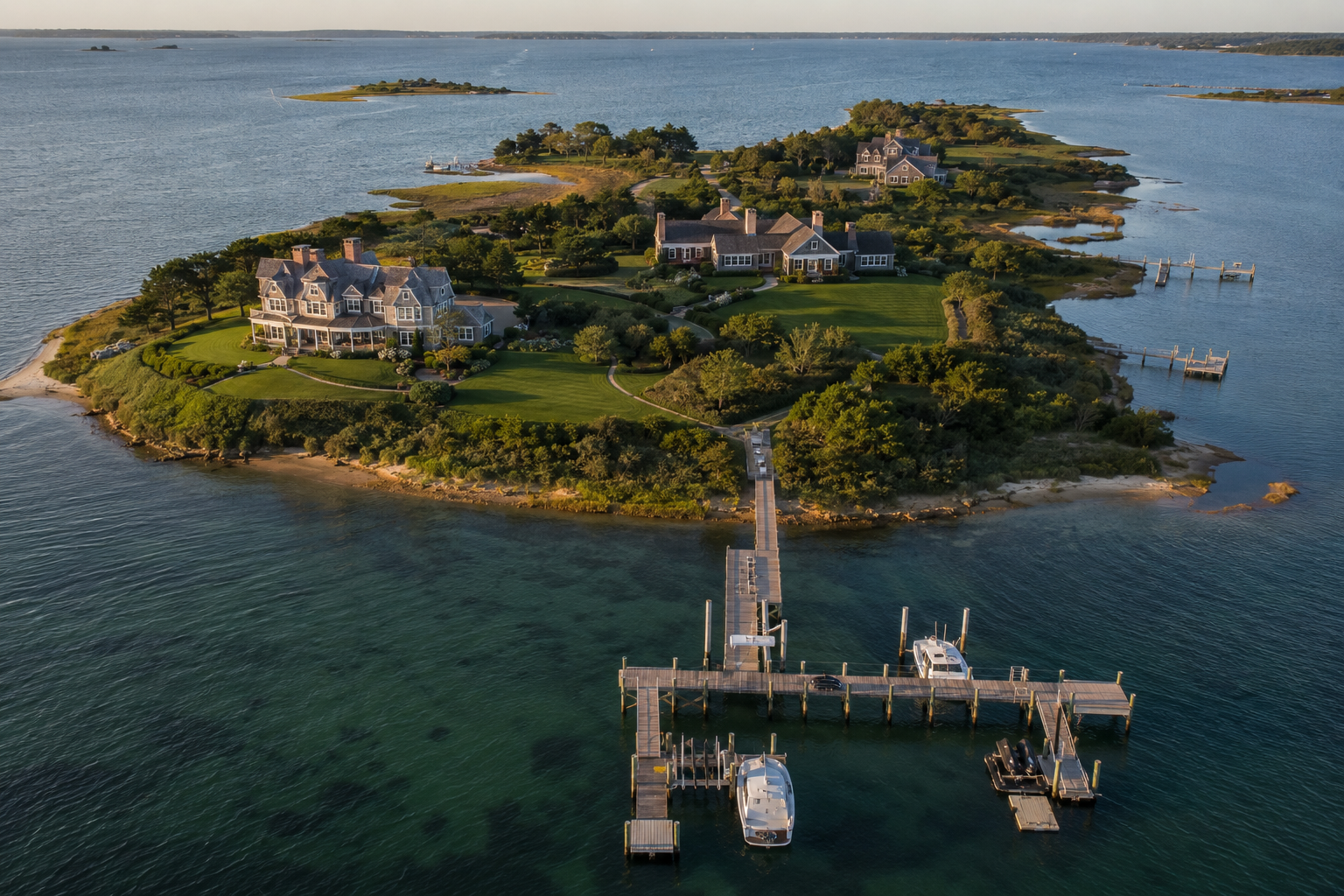
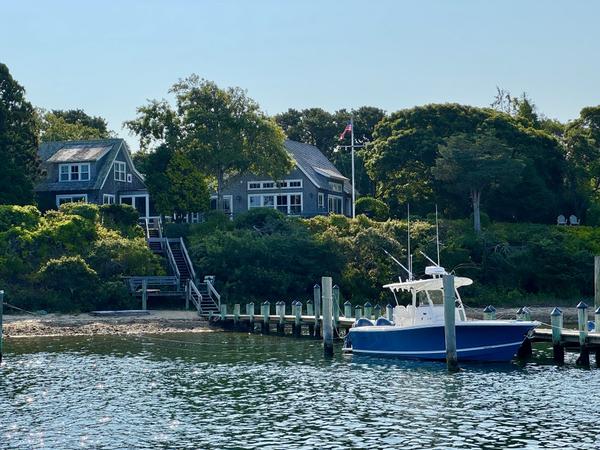
Massachusetts Chapter 91 licenses govern all private docks, piers, and structures built on tidal and navigable waters. An expired or unpermitted dock on a Chatham, Harwich, or Barnstable waterfront estate is not a cosmetic defect — it is a title encumbrance that can prevent closing entirely. A standard Chapter 91 license renewal takes 90 days under favorable conditions. A new dock permit requiring Conservation Commission review averages 180 days. Any environmental appeal extends that timeline to one year or beyond.
Before making an offer on any waterfront property with an existing dock structure, I advise buyers to request the current Chapter 91 license, its expiration date, and any outstanding compliance orders from the Massachusetts Department of Environmental Protection. This single document review has saved multiple clients from acquiring a multi-million dollar property with an unpermittable dock — an asset they were specifically purchasing for.
School Districts and Their Role in Luxury Market Positioning
Three regional high school districts anchor the Cape's luxury residential geography in ways that matter to relocating families. Monomoy Regional High School serves Chatham and Harwich, aligning with the Lower Cape's shingle-style estate market. Nauset Regional High School draws from Orleans, Brewster, Eastham, and Wellfleet — the towns bordering the Cape Cod National Seashore, where National Seashore boundary homes create a uniquely constrained inventory. Barnstable High School serves the full Barnstable municipality, including Osterville, Hyannis, Marstons Mills, and Cotuit, covering the widest spectrum of luxury housing from gated island compounds to deep-water dock properties.
Quiet Listings and the Off-Market Advantage in 2026
The most significant luxury transactions on Cape Cod — particularly in Chatham, Osterville, Hyannisport, and Provincetown — do not appear on public MLS portals. Oyster Harbors and Wianno waterfront estates almost categorically trade through broker-to-broker relationships and private buyer networks. For sellers, a quiet listing preserves privacy, controls showings, and eliminates the stigma of public days-on-market accumulation. For buyers, access to off-market inventory is not a feature of a portal subscription — it is a function of who your advisor is and which networks they operate within.
Decision Framework: Matching Buyer Profile to Cape Cod Village
- Relocating families prioritizing school access and year-round infrastructure: Sandwich (Barnstable High School feeder, strong municipal services) or Falmouth ($775,000 median, 55-day DOM, proximity to Woods Hole).
- Equity-preservation buyers seeking low carrying costs: Chatham — lowest property tax rate on the Cape at $3.47/$1,000, blue-chip resale demand, and consistent appreciation at the luxury tier.
- Privacy-first compound buyers: Oyster Harbors (Osterville) or Hyannisport — gated or de facto private, deep-water dock access, off-market transaction culture.
- Outer Cape buyers seeking National Seashore adjacency: Wellfleet or Truro — constrained buildable land supply, lower volume, higher price volatility per transaction; requires a local advisor who understands NSA mapping and Conservation Commission dynamics specific to Outer Cape towns.
- Investment-oriented buyers: The turnkey premium analysis applies with full force. A project property in any of these villages carries a realistic 18–24 month renovation horizon and permitting risk that eliminates short-horizon return scenarios.
Categories
Recent Posts
GET MORE INFORMATION